 Sage⇄
Sage⇄ Odoo
OdooLexware & Sage ↔ Odoo
Keep Lexware or Sage in the loop, without keying anything in twice.
Plenty of German SMBs still run Lexware or Sage alongside Odoo. zSYNC keeps invoices, postings, and master data flowing between the two, so nobody has to enter the same invoice into two systems.
Trusted by 50+ Odoo companies · 500+ connected APIs · Official Odoo Partner
Sound familiar?
Two systems, one set of invoices, and someone typing them in twice.
Odoo runs operations, Lexware or Sage runs the books.
Whenever the two systems need the same invoice, someone ends up copying it from one to the other by hand.
Customer and vendor master data drifts apart.
Update an address in Odoo and forget to update it in Lexware, and your accountant is now working from stale records.
A double-entered invoice is a double-counted number.
A typo or a missed entry during manual transfer means your books and your operations no longer agree.

How It Works
Three steps. All inside Odoo. No code.
1
Grab
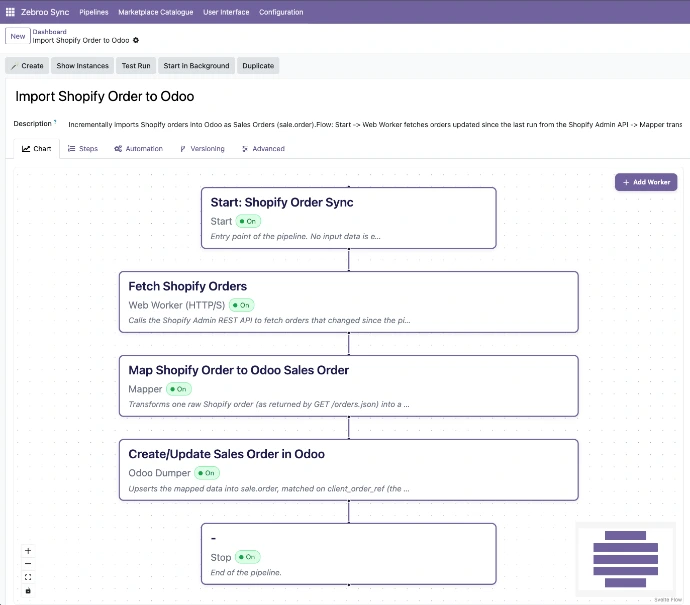
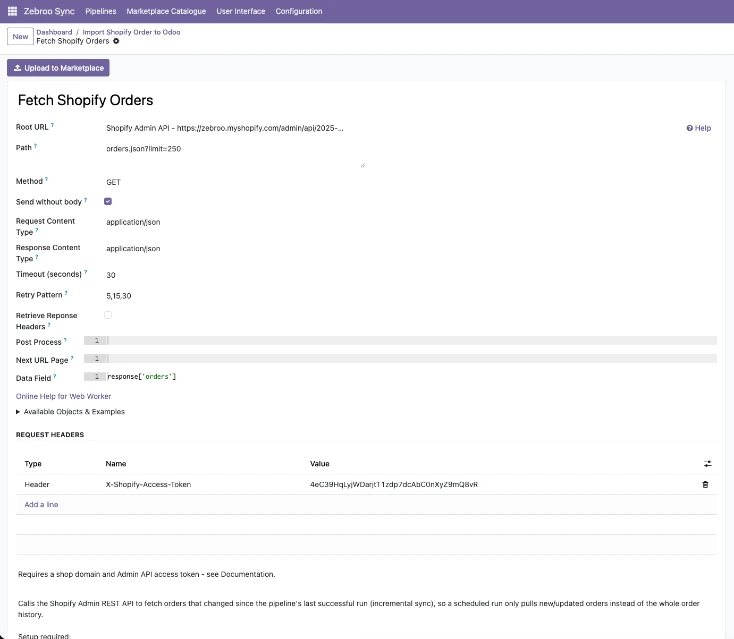
Picks up new and changed invoices, postings, and master records from Odoo or from Lexware/Sage's own export.
2
Map
Matches customers, vendors, and accounts between the two systems, translating each into the other's expected format.
3
Dump
Writes the record into the target system, so both stay in sync without anyone re-typing anything.
Runs automatically. One invoice, entered once.
What syncs
What syncs between Lexware / Sage and Odoo
Invoices & Postings
✓ Customer invoices →
✓ Vendor bills →
✓ Journal entries →
Master Data
→ Customers →
→ Vendors →
Reliability
✓ Deduplication →
✓ Consistent formatting →
Need a DATEV export instead? See the DATEV pipeline.
Why teams switch to zSYNC
Measurable results, not just features.
3 → 1
Cut support costs
On one project, support dropped from three full-time staff to one person working 10% of their time. You own the integration, so you stop paying an agency for every change.
1 entry, not 2
No more double bookkeeping
Every invoice gets entered once. Odoo and Lexware/Sage both stay current without a second manual pass.
0 outages
Survives every Odoo upgrade
Your Lexware/Sage integration lives in the front end, not in custom code, so it keeps running after Odoo upgrades instead of blocking them.
No key-person risk
No key-person risk
Any tech-savvy team member can build, own, and maintain interfaces: no developer on call, no single point of failure.
Built on a proven framework
Official Odoo Partner · Trusted by 50+ companies






Hundreds
interfaces built
50+
active customers
500+
connected APIs
99.9%
uptime
We handle everything. You focus on your business.
Professional setup by Zebroo, not self-service.
1
Install
We set up zSYNC in your Odoo and connect it to Lexware or Sage.
2
Configure
We build your first invoice and master data sync, matched to your account structure.
3
Train
We hand it over so your team owns and extends it themselves.
Live in just 1–3 days.
Book a Free Demo
Pricing
One price per connection. Scale as you grow.
You pay per connection, not per user, not per record. Every plan includes the full feature set, self-hosted and GDPR-compliant.
✓Full feature set in every plan
✓No user limits
✓Always the latest version
✓Self-hosted · GDPR-compliant
The price we quote holds for the entire term of your contract.
FAQ
Frequently Asked Questions
Which Odoo versions does zSYNC support?
zSYNC runs inside your Odoo and supports the current Community and Enterprise versions. Because your integrations live in the front end (not in custom code), they keep running after Odoo upgrades instead of blocking them.
Is my data secure?
zSYNC is self-hosted in your own Odoo, so your data never leaves your environment. It's GDPR-compliant, and you control every connection, every credential, and every pipeline directly.
Can I sync in both directions, Odoo to Lexware/Sage and back?
Yes. Most customers sync invoices one way and master data both ways, so whichever system a record is updated in, the other one catches up automatically.
What happens if a sync fails? Is there downtime?
Failures don't bring down your system. zSYNC runs on queued jobs, so integrations don't block each other. Every run is monitored, so you can retry a failed run, even add a field, and reprocess the exact same data.